Visual archive
Photographs
Browse photographs of William J. Sands, Harry Ferguson, tractors and machinery, colleagues, workshops, important locations, family life and related archival material.

The Handshake That Changed Farming
The moment years of experimental engineering met Ford’s capacity for mass production.
Read the full story
In October 1938, Harry Ferguson travelled to America carrying something far more important than a new tractor. He brought with him the culmination of years of experimental engineering: the Ferguson System.
At Henry Ford’s estate at Dearborn, Michigan, Ferguson demonstrated a Ferguson-Brown Model A tractor and its implements to Henry Ford Senior. The tractor used the integrated hydraulic three-point linkage system that allowed tractor and implement to operate effectively as a single unit. Ferguson-Brown tractor No. 722 is identified as the machine used for the demonstration.
Ford was impressed.
The two men reached an extraordinary agreement. There was no conventional written contract setting out their new partnership. Ferguson and Ford shook hands. Ford would manufacture a new tractor incorporating the Ferguson System, while Ferguson would bring his patents, engineering knowledge and system of implements to the venture.
It became known simply as the “Handshake Agreement.”
William Sands and the engineering behind the handshake
For the William J. Sands story, what happened at Dearborn should not be presented merely as a meeting between two famous men.
The technology Ferguson was able to demonstrate to Ford had emerged from a much longer programme of development in Belfast. William “Willie” Sands was one of the engineers involved in that story.
Ferguson Club histories describe Sands and Archie Greer among Ferguson’s long-standing engineering colleagues during the development of the hydraulic three-point system. The team’s experiments progressed from early implement attachment systems and the Duplex hitch towards hydraulic lifting and automatic draft control—the principles that ultimately made the Ferguson System so important.
So although the famous handshake was between Harry Ferguson and Henry Ford, behind Ferguson stood years of engineering work.
William J. Sands was part of that work.
From Belfast to mass production
The agreement transformed the scale on which Ferguson’s ideas could be realised.
Ford possessed something Ferguson could never have created independently: enormous industrial manufacturing capacity. Ferguson possessed the integrated tractor-and-implement technology Ford had seen demonstrated.
Their collaboration produced the Ford-Ferguson 9N, with production beginning in 1939 at Ford’s Rouge plant in Dearborn.
The significance extends far beyond one model of tractor. The three-point linkage architecture developed through Ferguson’s programme became foundational to modern agricultural tractors.
That makes this photograph a particularly powerful image for the Sands archive.
Five men stand beside a tractor in a field. But what the photograph represents is the moment decades of experimental engineering met the manufacturing power capable of taking it to farmers on an entirely different scale.
And within the history behind that machine lies the work of William John Sands of County Down.
View full photograph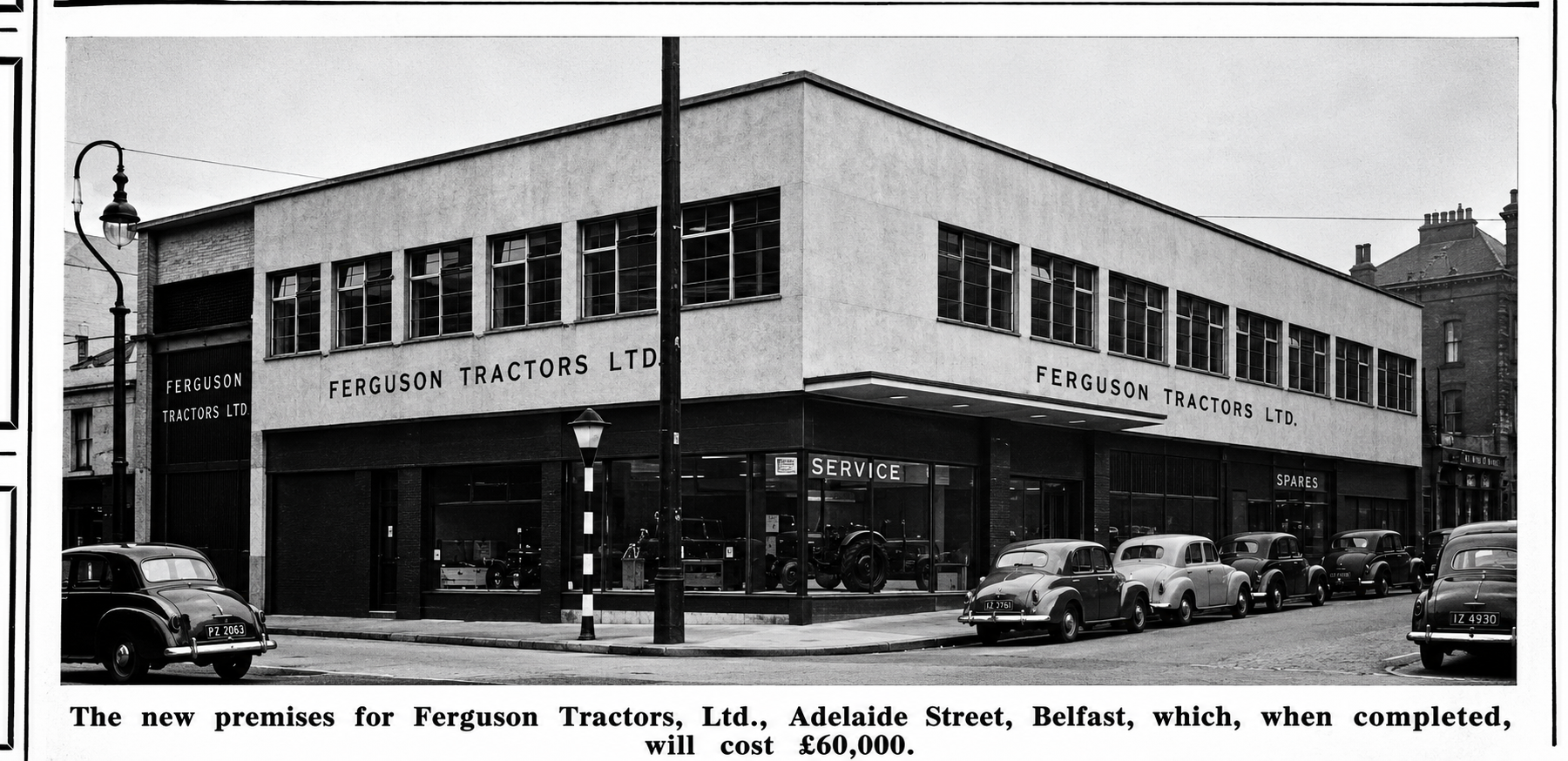
A new home for Ferguson Tractors
A newspaper photograph of the new Belfast premises—a visible sign of the Ferguson enterprise’s growth.
Read the full story
This contemporary newspaper photograph records the new premises of Ferguson Tractors Ltd. in Adelaide Street, Belfast. The original caption noted that the building, when completed, was expected to cost £60,000—a substantial investment and a visible sign of how far the Ferguson enterprise had developed.
Behind that growth was a long period of engineering development in which William John Sands played a central role. Sands had worked alongside Harry Ferguson from the early years of the Belfast business, through experiments with implements, tractors and hydraulic control, and into the development of the integrated tractor-and-implement system that became associated worldwide with the Ferguson name.
By the time premises such as Adelaide Street were being established, Ferguson was no longer simply the Belfast engineer and aviation pioneer of the early years. His name had become attached to an increasingly important agricultural engineering enterprise.
For William Sands, the building therefore belonged to a story he had helped create. The polished frontage and the Ferguson name represented decades of largely unseen engineering work: prototypes built and altered, mechanisms tested, problems solved, drawings produced and ideas refined.
It is easy to tell the Ferguson story through tractors and famous agreements. Photographs such as this reveal another side of it—the physical infrastructure of a company growing around the engineering work carried out by Ferguson, Sands and their colleagues.
Original newspaper caption“The new premises for Ferguson Tractors, Ltd., Adelaide Street, Belfast, which, when completed, will cost £60,000.”View full photograph
Before the tractors, there was the aeroplane
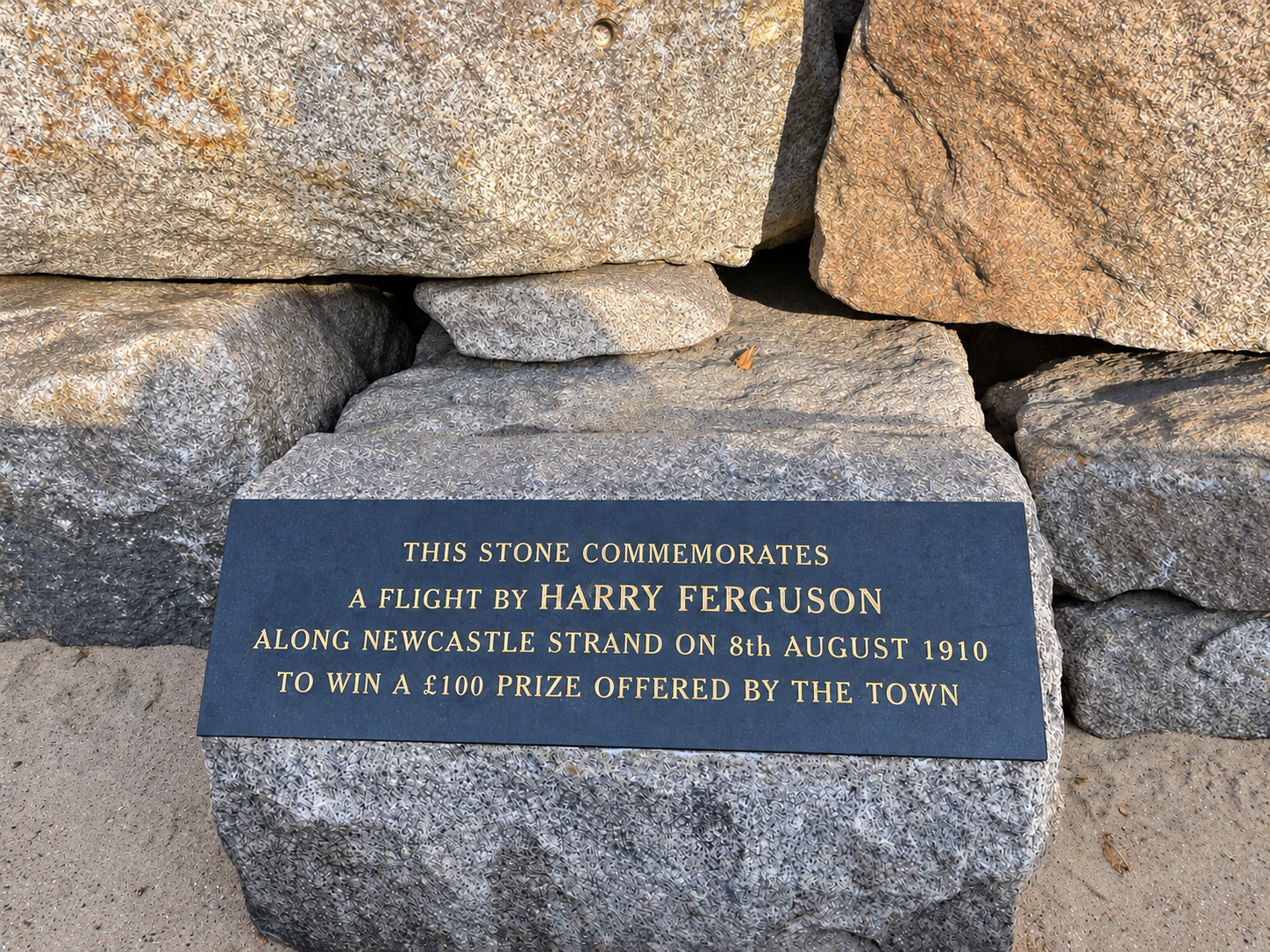
A memorial to Harry Ferguson’s prize flight—and William J. Sands’ place near the beginning of their shared engineering story.
Read the full story
On 8 August 1910, Harry Ferguson took to the air above Newcastle Strand, County Down, attempting to win a £100 prize offered by the town for a flight along the beach. Among those on the strand that day was a young William John Sands, then just nineteen years old.
The moment belonged to Ferguson, but William’s presence gives it another significance. He was witnessing at close quarters the determination, experimentation and practical engineering that would come to define Ferguson’s career—qualities that would soon become part of William’s own working life.
Within the following years, Sands became one of Ferguson’s closest and most important engineers. Their association would extend far beyond those early experiments in aviation, through motor engineering and ultimately into the development of the Ferguson tractor and the engineering principles behind the Ferguson System.
Today, a stone on Newcastle seafront commemorates Ferguson’s flight. For the Sands family, however, the place carries another connection: William J. Sands stood on this beach and witnessed it.
More than a century later, the memorial marks not only an extraordinary episode in early Irish aviation, but a moment near the beginning of a remarkable shared engineering story.
Newcastle Strand · County Down · 8 August 1910
View full photograph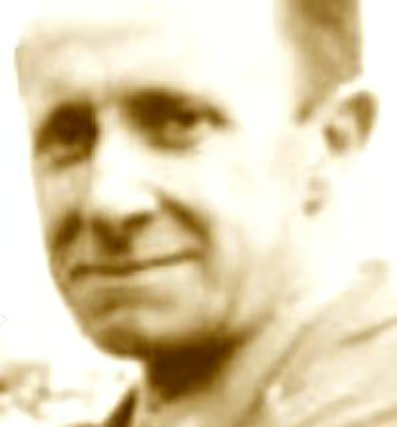
William J Sands in the 1930s
A portrait of William Sands during a defining decade in the development of the Ferguson System.
View photograph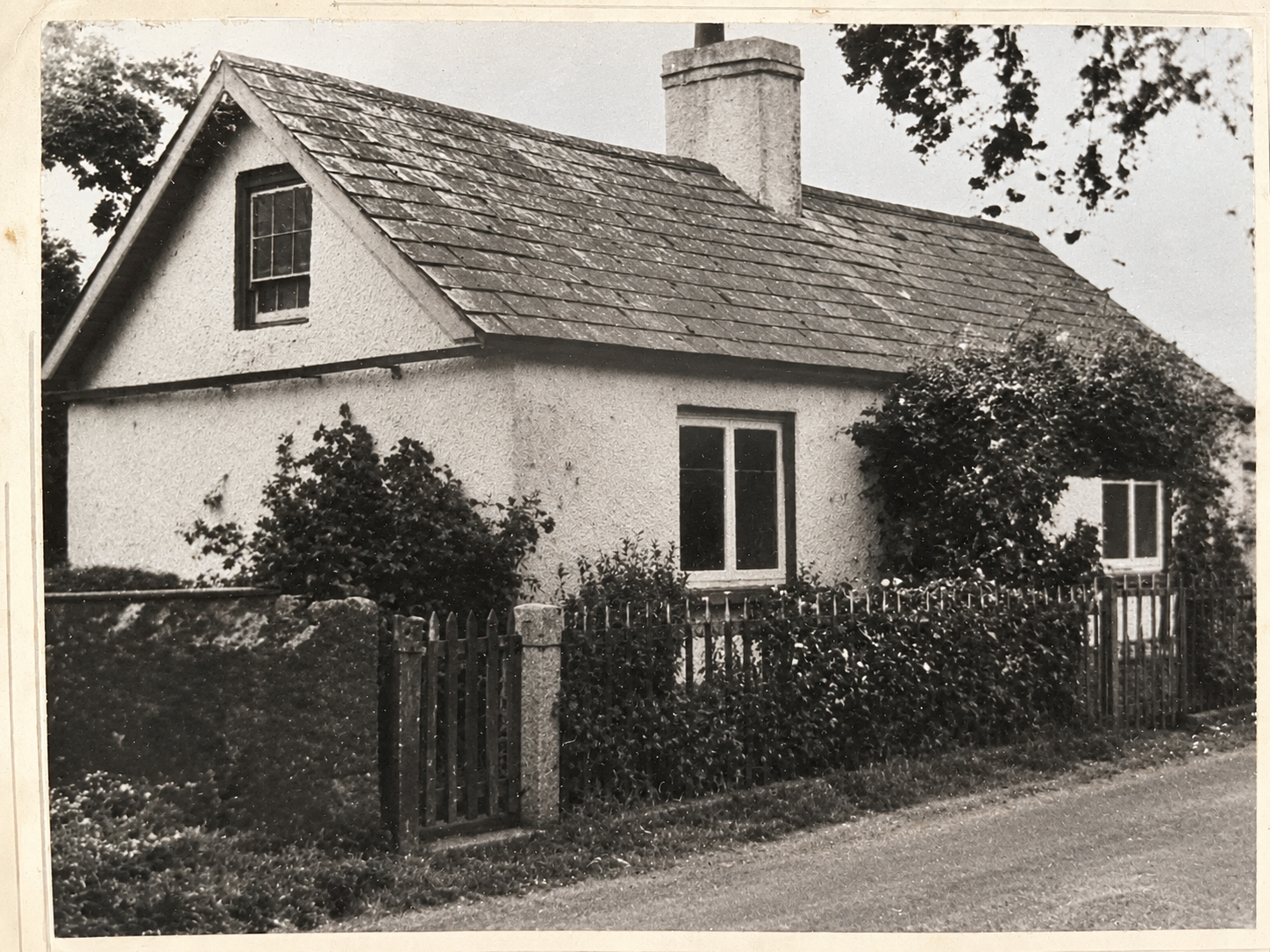
William J Sands’ birth home
The house at Kilsorrel, near Dromore, where William John Sands was born on 18 June 1891.
View photograph